
“Just as the worthy and skilled painter imitates all things created in nature by varying the colours, in the same way you can imitate the expression made by the human voice on a wind and stringed instrument”. This concept, which was explained by Silvestro Ganassi in his Opera intitulata La Fontegara already in 1535, has inspired Concerto Scirocco to seek the maximum expression when interpreting the instrumental music of the 16th and 17th centuries. Hand in hand with the development of the instrumental repertoire, rhetoric became the link between instrument and voice, between imitation and reality. Where words were lacking, composers and instrumentalists used rhetoric to delight listeners just as singers did. In this, its sixth, recording, Concerto Scirocco focuses on an early baroque anthology of pieces, “painting in notes” a number of musical portraits full of contrasts: the pulsating rhythm of the battle in the Symphonia “A gran battaglia”, the beguiling mermaids in Marco Uccellini’s Aria sopra “Questa bella Sirena”, or the operatic tension in the Sonata a tre by Francesco Cavalli.
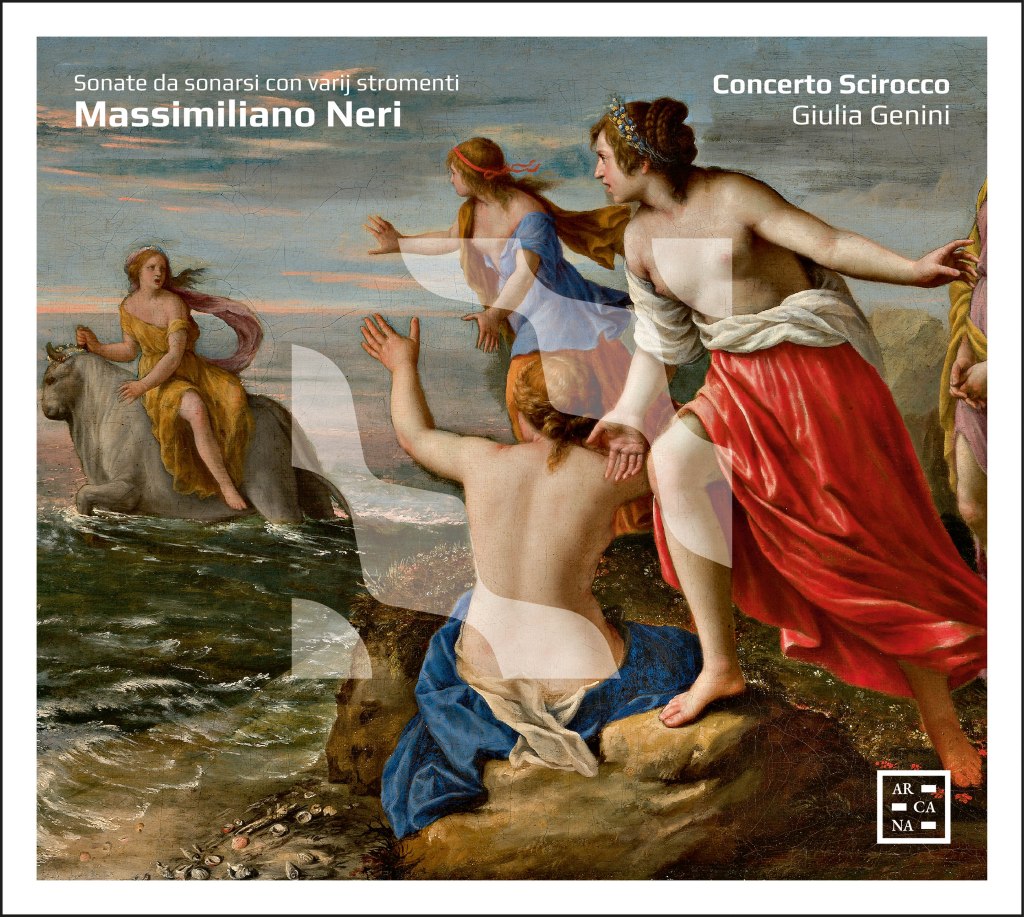
Born in Bonn around 1620 to Veronese parents, Massimiliano Neri was choirmaster at the Ospedaletto and organist at St. Mark’s in Venice, where he published his first volume of Sonatas and Canzonas. He presented his second collection of Canzonas and Sonatas to the Emperor Ferdinand III in Vienna in 1651, later becoming Kapellmeister to the Prince-Elector of Cologne in Bonn in 1664. His affections, however, remained Italian: he married the Florentine singer and composer Caterina Giani in 1654. Many of Neri’s compositions suffered extensive war damage in various periods; important musicological reconstruction has recovered parts of them that would otherwise have been lost forever. Concerto Scirocco offers a comprehensive selection of pieces that range from small groups to polychoral ensembles, all of which have a magnificent and typically Venetian opulence. The monograph is enriched by three motets, two by Neri and one by Caterina Giani, performed in collaboration with Voces Suaves; it provides a vivid portrait in sound of a greatly-valued 17th-century composer. This album was awarded 5 Diapasons, 5 Stars Classica, La Clef de Res Musica, 5 Stars Musica Magazine, La Clef d’Or de Res Musica, was TOP disc of MP, and Disc of the week of W Kulturalny Sposob in Poland. https://outhere-music.com/en/albums/neri-sonate-da-sonarsi-con-varij-stromenti
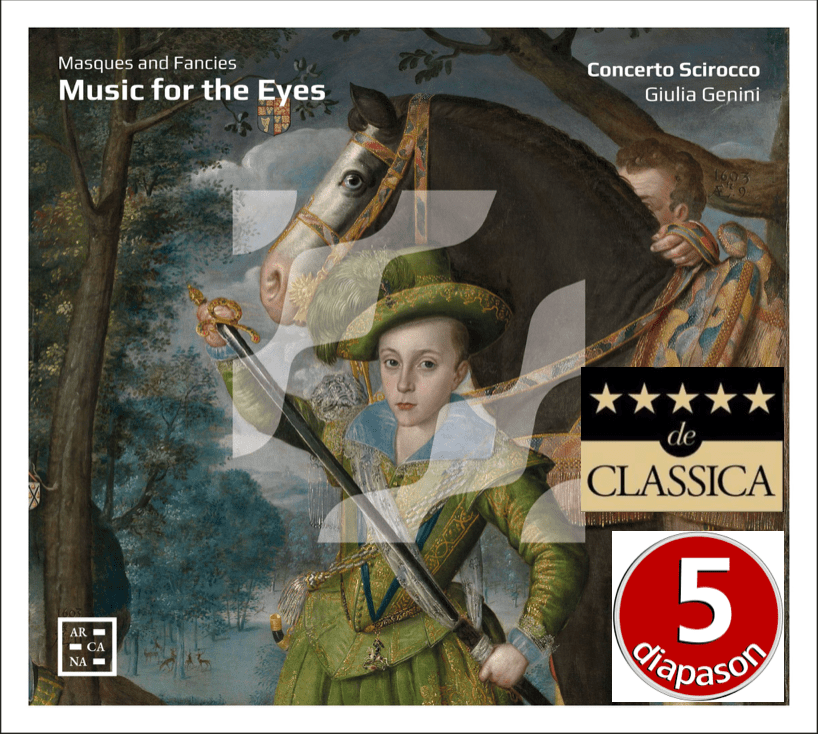
Acclaimed for its “rhythmic verve, spontaneity and a glorious explosion of color” (Pizzicato, Canzoni da Sonar con ogni sort of istromenti, G. Picchi), Concerto Scirocco explores the English musical life at the time of Elizabeth I and James I, particularly the genre Masks and Fancies. Cultural life in England in the 16th and 17th centuries was effervescent: the Courts invest important means for the production of masks, shows capable of mix music, dance, theater and scenography, in a sumptuous demonstration of grandeur. At the same time, the first theaters dedicated to Drama were born in the suburbs: “Red Lion”, “The Theater”, “The Rose”, “The Swan” and the Globe in 1599. Music plays a fundamental role and accompanies this eccentric cultural vitality: the asymmetrical Fantasies of J. Hilton, the monumental Chansons et Pavanes by W. Brade, the insolent and rhetorical masks of R. Johnson reveal to us a time of incomparable musical creativity. This recording was awarded 5 Stars from CLASSICA Magazine and 5 Diapasons from Diapason Magazine. https://outhere-music.com/de/alben/music-eyes-masques-and-fancies

“El soto dei Frari”, “the lame man of the Frari”: this was the nickname given to the Venetian Giovanni Picchi, perhaps a pupil of Giovanni Croce, in the charges pressed against him in 1610 for teaching music to the nuns in the Spirito Santo without a license. In 1612 we find him intent on initiating an appeal against the Scuola Grande di San Rocco, after the appointment of Giovanni Battista Grillo as organist. The appeal is successful, obliging the powerful institution to repeat the examination. We also find this original and hot-tempered personality in his 19 Canzoni da sonar con ogni sorte d’istromenti (Venice 1625): a collection which reveals the brilliant flair of this still little-known composer. The detailed instrumentation given by the author allows us to recreate the typically Venetian aural splendor, with glorious sackbut choirs and virtuosic violins, recorders, cornets and bassoon. With the Canzoni da Sonar, presented by Concerto Scirocco in the first ever complete recording of the work, Giovanni Picchi sculpts his mastery into music with a variety of vivid colors and pulsating affects, earning a place of honor in the world of the Venetian school. This recording was nominated for the “Preis der deutschen Schallplattenkritik 2020” in the category “early music”, reviewed by BBC, France Musique, BR Klassik, SRF, nominated “disc of the months” in december 2020 by Rete Due, editor’s Choice in September 2020 by “The Classic Review” and and awarded 5 Stars from MUSICA Magazine. https://outhere-music.com/fr/albums/canzoni-da-sonar-con-ogni-sorte-d-istromenti-a476

After rediscovering the music of Giovanni Croce, maestro di cappella at St Mark’s cathedral in Venice (A439), Ensembles Voces Suaves & Concerto Scirocco take us to Salzburg and put the spotlight on the Verona-born composer Stefano Bernardi, a contemporary of Monteverdi. Bernardi reached the peak of his career in Salzburg, when he was appointed the first Kapellmeister of its newly constructed cathedral, a position he held from 1628 to 1634. Bernardi contributed greatly to the integration of the Italian nuovo stile in Salzburg, especially of features such as polychorality and the stile concertato, and may therefore be seen as the musical forefather of later, more famous Salzburg musicians. The outstanding stature of his music is clearly evident from his majestic Requiem, the manuscript of which is still preserved in the Salzburg cathedral archives. Particularly impressive is the Sequentia, which forms the core of the work and opens with an elaborate Dies irae section, based on the famous chant melody. The Requiem, as well as a number of Motets by Bernardi, is recorded here for the very first time. This CD was awarded the Diapason Découverte from Diapason Magazine and was nominated for the “Preis der deutschen Schallplattenkritik 2020”. https://outhere-music.com/en/albums/lux-terna-ein-salzburger-requiem-a470
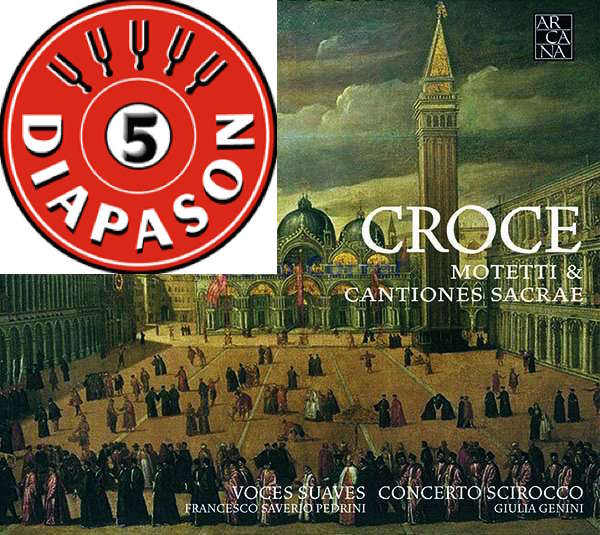
“Venice, July 1603: Giovanni Croce, known as ‘il Chiozzotto’, a priest at the church of Santa Maria Formosa, was appointed maestro di cappella of St Mark’s basilica, one of the most prestigious posts in the musical world of the time. A controversial biography, many aspects of which have not yet been elucidated, and a musical output of excellent quality constitute the appeal of this composer born in Chioggia, who is still overshadowed today by his famous successors. Yet Giovanni Croce proves to be an extraordinary figure, halfway between the conservative Venetian school of Gioseffo Zarlino and the modernism of Claudio Monteverdi. He makes masterly use of double chorus and of such special devices as echo effects, while maintaining a fine transparency in his counterpoint that links him with classical polyphony. Two exceptional young Swiss ensembles, the vocal group Voces Suaves (which has won several prizes for its first two recordings) and the instrumental ensemble Concerto Scirocco, combine here in the magnificent surroundings of the palatine basilica of Santa Barbara in Mantua, where they have the advantage of the outstanding Antegnati organ built in 1565, to honour Giovanni Croce and his contemporaries and introduce us to other aspects of the glorious musical activity at St Mark’s”. This CD was awarded 5 Diapasons from Diapason Magazine and was nominated for the “Preis der deutschen Schallplattenkritik 2019” https://www.outhere-music.com/en/albums/motetti-cantiones-sacrae-a439
 CONCERTO SCIROCCO
Devi effettuare l'accesso per postare un commento.